
Umrah - A Spiritual Journey Towards Purity and Renewal
Umrah is a great act of worship performed by Muslims to draw closer to God Almighty. It is a confirmed Sunnah of the Prophet (peace and blessings be upon him). It may be performed at any time of the year, except during Hajj for those intending to devote themselves solely to Hajj. Umrah is also called the “lesser Hajj” because it includes some of the rituals of Hajj.
The Messenger of God (peace and blessings be upon him) said: “Umrah to Umrah is expiation for what comes between them, and an accepted Hajj brings no less than Paradise as a reward.” [Narrated by Bukhari and Muslim] This hadith demonstrates the great effect of Umrah in forgiving sins and purifying the soul.
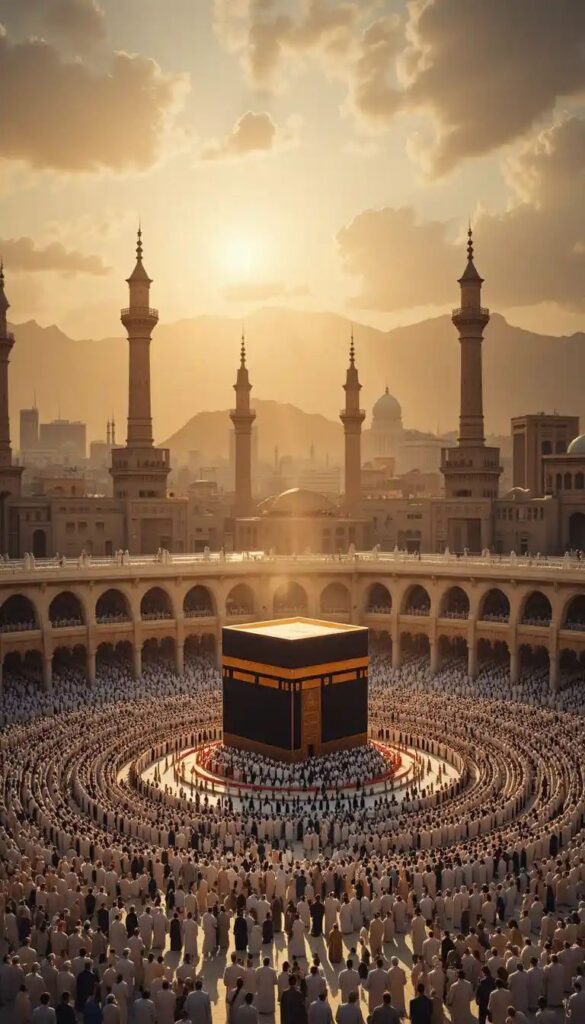
Umrah begins with the Ihram at one of the designated Miqats (such as Dhul-Hulayfah, Al-Juhfah, Qarn Al-Manazil, Yalamlam, or Dhat Irq). The pilgrim then enters Mecca and circles the Kaaba seven times, starting and ending at the Black Stone, while expressing humility and submission to God.
After the Tawaf, the pilgrim performs two rak’ahs of prayer behind Maqam Ibrahim, if possible. Then, he drinks Zamzam water with the intention of healing and blessing. Afterwards, the pilgrim proceeds to perform the Sa’i (sacrificing rituals) between Safa and Marwa, a seven-round circuit that begins at Safa and ends at Marwa. At the end of the Umrah, the pilgrim shaves or shortens his hair, thus concluding the rituals of Umrah.
Umrah is characterized by its ease of performance compared to Hajj, and by the possibility of performing it repeatedly throughout the year, especially during Ramadan. The Prophet (peace and blessings be upon him) said, “An Umrah in Ramadan is equal to a Hajj with me,” which highlights its great merit in this blessed month.
Umrah is not merely a circumambulation and Sa’i; it is a journey to renew one’s covenant with God, an opportunity to hold oneself accountable and purify one’s heart from negligence and sin. It also deepens one’s spiritual connection to the Sacred House and revives faith in the heart of the Muslim.
Many Muslims are keen to perform Umrah, especially during Ramadan or during vacations, because of the tranquility and peace it brings, and it leaves a deep impression of humility, fear, and repentance.
The Messenger of God (peace and blessings be upon him) said: “Umrah to Umrah is expiation for what comes between them, and an accepted Hajj brings no less than Paradise as a reward.” [Narrated by Bukhari and Muslim] This hadith demonstrates the great effect of Umrah in forgiving sins and purifying the soul.
Umrah begins with the Ihram at one of the designated Miqats (such as Dhul-Hulayfah, Al-Juhfah, Qarn Al-Manazil, Yalamlam, or Dhat Irq). The pilgrim then enters Mecca and circles the Kaaba seven times, starting and ending at the Black Stone, while expressing humility and submission to God.
After the Tawaf, the pilgrim performs two rak’ahs of prayer behind Maqam Ibrahim, if possible. Then, he drinks Zamzam water with the intention of healing and blessing. Afterwards, the pilgrim proceeds to perform the Sa’i (sacrificing rituals) between Safa and Marwa, a seven-round circuit that begins at Safa and ends at Marwa. At the end of the Umrah, the pilgrim shaves or shortens his hair, thus concluding the rituals of Umrah.
Umrah is characterized by its ease of performance compared to Hajj, and by the possibility of performing it repeatedly throughout the year, especially during Ramadan. The Prophet (peace and blessings be upon him) said, “An Umrah in Ramadan is equal to a Hajj with me,” which highlights its great merit in this blessed month.
Umrah is not merely a circumambulation and Sa’i; it is a journey to renew one’s covenant with God, an opportunity to hold oneself accountable and purify one’s heart from negligence and sin. It also deepens one’s spiritual connection to the Sacred House and revives faith in the heart of the Muslim.
Many Muslims are keen to perform Umrah, especially during Ramadan or during vacations, because of the tranquility and peace it brings, and it leaves a deep impression of humility, fear, and repentance.